 Some words, like some wines, feel pleasant in the mouth. Our word is one of them; it has no sharp edges when present and when gone, it leaves a pleasant recollection.
The term’s etymology is Greek, “combined with an English element,” The OED entry reports. Dating from at least the 16th Century, it means transient or temporary. All things are temporary, if one takes a long enough view: the Blue Ridge Mountains once stood far taller. Yet “ephemeral” gives the sense of things that pass quickly, not durations of hundreds of millions of years. If you don’t pause to look, they are gone. Look at a cloud in the wind or the latest cultural fad. Here today, gone tomorrow?
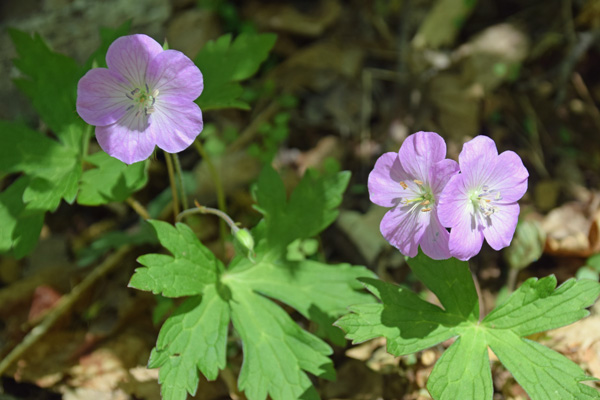
I had always used the word in this sense until my wife began reminded me of the plants we see only at this time of year in flower. Our honey bees, as well as many native pollinators, love them. Soon we get hotter days and the grass grows taller, and our spring ephemerals vanish until next March and April.
If you look in a natural grassy area, instead of some chemically treated lawn, or in woodland area at this time of year, you may see many small flowering plants. These are the Spring ephemerals. Look for violets, the poorly named “Dead Nettle,” Virginia Bluebells, Dutchman’s Breeches, and more. I found a site about Northern Virginia ephemerals, a fine resource for an overdeveloped, overbuilt part of our state that, if you know where to look contains many lovely spots that have escaped the bulldozer’s blade.
Before it stops flowering, I’m going to toss some Dead Nettle along with Wild Onions I glean in a salad. It’s not only edible but purportedly has medicinal properties. Be careful where you forage in these days of overuse of lawn chemicals. We put none on the ground at our farm.
Some insects are know as ephemerals, too. They might live only a day. In the case of gnats, we can be thankful.
I’ll employ a cliche: some of the best things in life also are free and many are ephemeral. Slow down, put up the phone, and look. Enjoy while you can.
It costs you nothing to say our word or, if you know were to look, spot an ephemeral.
Send metaphors and words to cover by e-mailing me (jessid -at- richmond -dot- edu) or leaving a comment below. Want to write a guest entry? Let me know!
See all of our Metaphors of the Month here and Words of the Week here.
Image: Wild Geranium from Flickr, courtesy of Virginia State Parks.