Metaphor of the Month! Bluebird Day

A Bluebird DayThis week I’ll add a favorite new term, one I learned just recently from my friend Henry. I’ve known him since childhood, and I drove out to his farm to see how his animals were doing, help pick up some remaining firewood I’d cut in the Winter, and take a ride in his classic car.

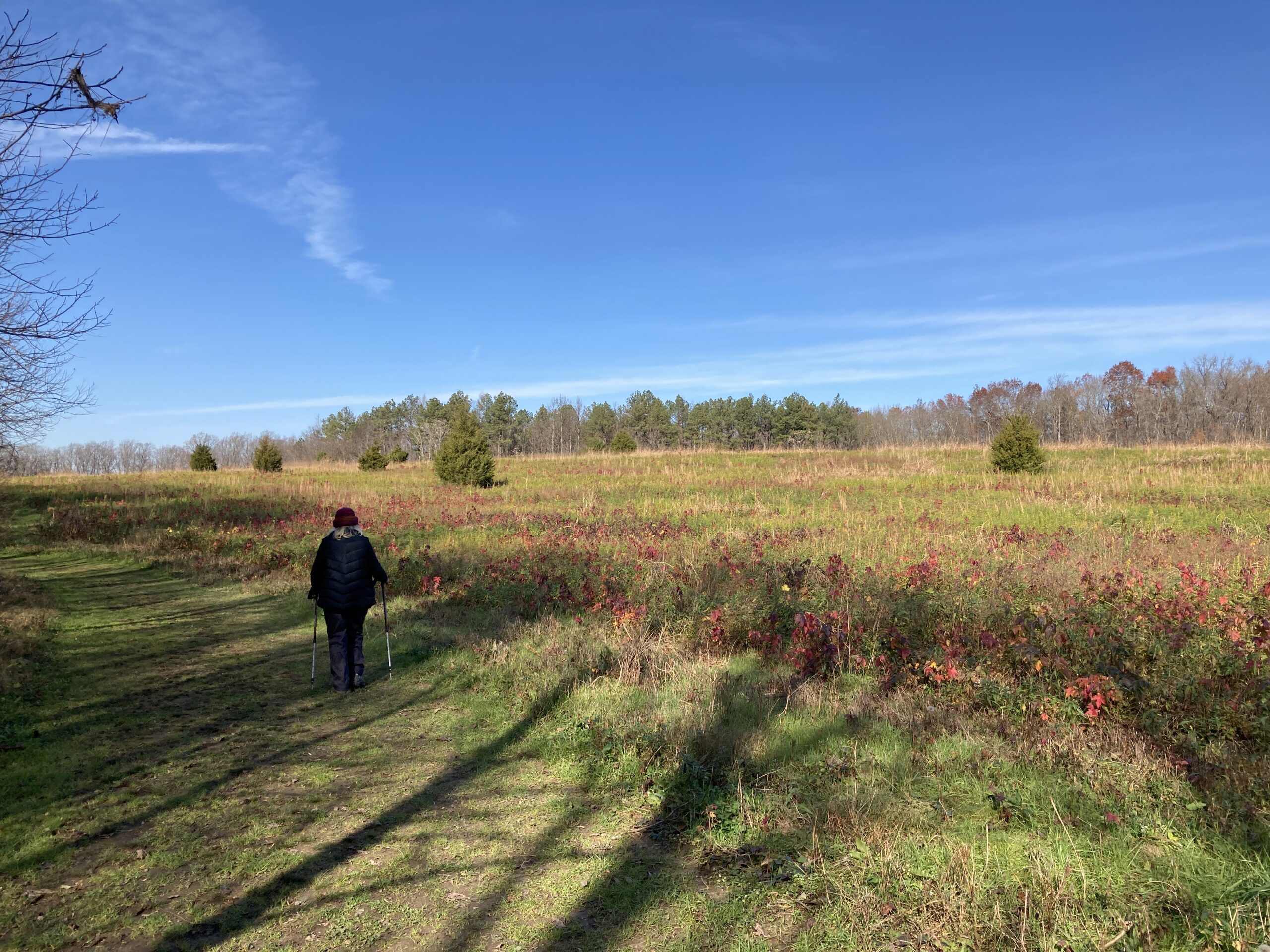
We were cruising down US 33 toward lunch in the town of Montpellier VA when Henry said “it’s a perfect Bluebird day today.” I love bluebirds and looked around, not seeing any, but the deep-blue sky reminded me of their plumage. The noon sky was cloudless, the air crisp, and (at least until the recent April heat wave) my instincts told me to promised a balance of cool weather, sun, and rain that typify early Spring in central Virginia.

Today, some lovely rain has broken the hot-and-dry conditions. Tomorrow, when I hit the road, the forecast promises a few Bluebird days ahead. It’s perfect flying weather up to Bangor Maine, then to visit family in New Brunswick, Canada. Not sure if I’ll see any blue birds, but birding and wildlife watching in the Canadian Maritimes is a very rewarding pastime.

So far, so good. Our metaphor simply means a cloudless day, and The Merriam-Webster Dictionary online cites a first use of 1860 but no context.

I turned to the OED for more guidance. Not a sausage, as the Brits say. I did learn elsewhere that skiers use the term and enjoy such days on the slopes. A blog post on the term claims it originated with skiing. I don’t ski but I love to kayak or hike on a cool, cloudless day.

Tomorrow I begin a short vacation; (semi)retirement means I can take them generally whenever I want. This post will be the last for a a few weeks. I’ll take us out with some Frank Sinatra, so the Chairman of the Board can send you and me on our way.

Whatever the weather, I’ll still be posting here. Send metaphors and words to cover by e-mailing me (jessid -at- richmond -dot- edu) or leaving a comment below. Want to write a guest entry? Let me know!

See all of our Metaphors of the Month here and Words of the Week here.

Image: Close to a Bluebird Day at Powhatan State Park.

 

Word of the Week! Sine Qua Non

BoethiusThree words this week, for the price of one. I find this term useful; though I don’t use it myself, I have seen it recently in long-form journalism. Wikipedia has an entire entry on it, so here are a few highlights. See that Wikipedia entry for its application in writing about medicine and the law.

Let’s get the definition out of the way: a mandatory precondition, an essential element, a key ingredient. The full Latin term is condicio sine qua non. So “today, a valid passport is a sine qua non of international travel,” or “to govern well at any level today, knowledge of macroeconomics appears to be a sine qua non for successful leadership.”

The origin is ancient, as we can tell from its Latin roots. That meaning, as given in Wikipedia “without which [there is] nothing,” appeared in the work of the early Christian philosopher Boethius. Earlier still, Aristotle used its Greek equivalent. For formal writing, I always like how a Latin phrase or Latinate word elevates the occasion, as does my taste for dress shirts and sometimes a tie when in the classroom.

What are some other expressions where our phrase might impress readers and make your prose more formal?  We simply lack good alternatives in English. “Must have” sounds blunt to me.

Summer break is a sine qua non for most academics and their students. So are frequent posts in a successful blog. As Spring turns to Summer and students leave for break, I’ll still be posting here. Send metaphors and words to cover by e-mailing me (jessid -at- richmond -dot- edu) or leaving a comment below. Want to write a guest entry? Let me know!

See all of our Metaphors of the Month here and Words of the Week here.

Image of Boethius from Wikipedia.

Word of the Week! Ephemeral

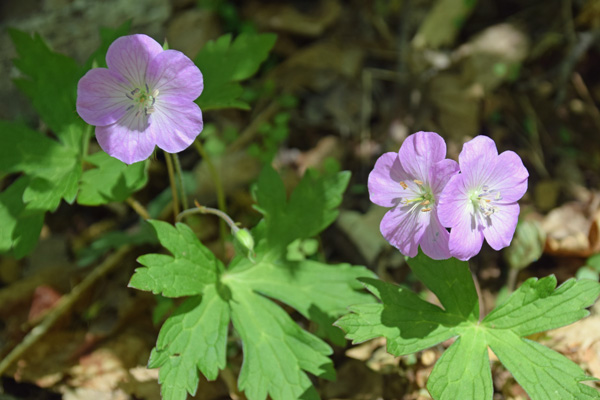
Wild Geranium in bloomSome words, like some wines, feel pleasant in the mouth. Our word is one of them; it has no sharp edges when present and when gone, it leaves a pleasant recollection.

The term’s etymology is Greek, “combined with an English element,” The OED entry reports. Dating from at least the 16th Century, it means transient or temporary. All things are temporary, if one takes a long enough view: the Blue Ridge Mountains once stood far taller. Yet “ephemeral” gives the sense of things that pass quickly, not durations of hundreds of millions of years. If you don’t pause to look, they are gone. Look at a cloud in the wind or the latest cultural fad. Here today, gone tomorrow?

I had always used the word in this sense until my wife began reminded me of the plants we see only at this time of year in flower. Our honey bees, as well as many native pollinators, love them. Soon we get hotter days and the grass grows taller, and our spring ephemerals vanish until next March and April.

If you look in a natural grassy area, instead of some chemically treated lawn, or in woodland area at this time of year, you may see many small flowering plants. These are the Spring ephemerals. Look for violets, the poorly named “Dead Nettle,” Virginia Bluebells, Dutchman’s Breeches, and more. I found a site about Northern Virginia ephemerals, a fine resource for an overdeveloped, overbuilt part of our state that, if you know where to look contains many lovely spots that have escaped the bulldozer’s blade.

Before it stops flowering, I’m going to toss some Dead Nettle along with Wild Onions I glean in a salad. It’s not only edible but purportedly has medicinal properties. Be careful where you forage in these days of overuse of lawn chemicals. We put none on the ground at our farm.

Some insects are know as ephemerals, too. They might live only a day. In the case of gnats, we can be thankful.

I’ll employ a cliche: some of the best things in life also are free and many are ephemeral. Slow down, put up the phone, and look. Enjoy while you can.

It costs you nothing to say our word or, if you know were to look, spot an ephemeral.

Send metaphors and words to cover by e-mailing me (jessid -at- richmond -dot- edu) or leaving a comment below. Want to write a guest entry? Let me know!

See all of our Metaphors of the Month here and Words of the Week here.

Image: Wild Geranium from Flickr, courtesy of Virginia State Parks.