10 Reasons Why We Need Heroes

By Scott T. Allison and George R. Goethals

People often ask us why we need heroes.  Although the phrase “why we need them” is in the subtitle of our first HEROES book, we’ve never really offered a succinct list of the many reasons why heroes are so important to us.  Here we aim to do just that, hoping you’ll forgive us for offering up yet another top-10 list.

Below we’ve assembled 10 major reasons why people need heroes.  This list isn’t meant to be exhaustive by any means.  But it’s a good start.  Here goes:

1.  We’re born to have heroes — More than a half-century ago, Carl Jung proposed the idea that all humans have collectively inherited unconscious images, ideas, or thoughts, which he called archetypes.  These archetypes reflect common experiences that all humans (and their ancestors) have shared over millions of years of evolution, and the main purpose of these archetypes is to prepare us for these common experiences.  Two such archetypes, according to Jung, are heroes and demons.  Current research appears to support Jung – scientists have found that newborn babies are equipped with a readiness for language, for numbers, and for their parents’ faces.  Humans appear to be innately prepared for certain people and tasks, and we believe this may include encounters with heroes.

2.  Heroes nurture us when we’re young — Our research has shown that when people are asked to name their own personal heroes, the first individuals who often come to mind are parents and caretakers.  All of us owe whatever success we’ve had in life to the people who were there for us when we were young, vulnerable, and developing.  When we recognize the great sacrifices that these nurturers and caretakers have made for us, we’re likely to call them our heroes.

3.  Heroes reveal our missing qualities — Heroes educate us about right and wrong.  Most fairytales and children’s stories serve this didactic purpose, showing kids the kinds of behaviors that are needed to succeed in life, to better society, and to overcome villainy.  It is during our youth that we most need good, healthy adult role models who demonstrate exemplary behavior.  But adults need heroic models as well.  Heroes reveal to us the kinds of qualities we need to be in communion with others.

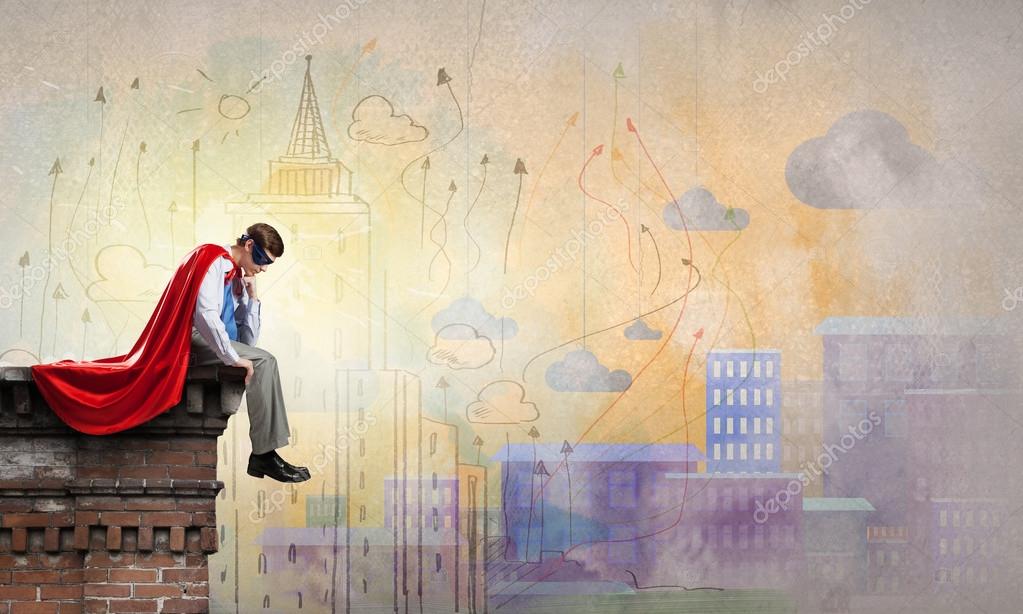
4.  Heroes save us when we’re in trouble — This principle explains the powerful appeal of comic book superheroes.  People seemingly can’t get enough of Batman, Superman, Spiderman, Iron Man, and many others. We are moved by stories of magical beings with superhuman powers who can instantly remove danger and make everything right.  This principle also explains our extreme admiration for society’s true heroic protectors – law enforcement officers, firefighters, EMTs, paramedics, and military personnel.

5.  Heroes pick us up when we’re down — Life inevitably hands us personal setbacks and failings.  Failed relationships, failed businesses, and health problems are common life experiences for us.  Our research has shown that it is during these phases of great personal challenge in our lives that heroes are most likely inspire us to overcome whatever adversity we’re facing.  Heroes lift us up when we’re personally in danger of falling down emotionally, physically, or spiritually.

6.  Heroes give us hope — Independent of our own personal well-being, we cannot help but recognize that the world is generally a troubled place rife with warfare, poverty, famine, and unrest.  Heroes are beacons of light amidst this vast darkness.  Heroes prove to us that no matter how much suffering there is in the world, there are supremely good people around whom we can count on to do the right thing, even when most other people are not. Heroes bring light into a dark world.

7.  Heroes validate our preferred moral worldview — One fascinating theory in psychology is called terror management theory, which proposes that people’s fear of death strengthens their allegiance to cultural values. Just the simple act of reminding people of their mortality leads them to exaggerate whatever moral tendencies they already have.  For example, studies have shown that reminders of death lead people to reward do-gooders and punish bad-doers more than they normally would.  Just thinking about the fragility of life can lead us to need and to value heroes.

8.  Heroes provide dramatic, entertaining stories — Psychologists have long been aware of the power of a good, juicy narrative.  Stories of heroes and heroic myth have entertained humans since the dawn of recorded history.  Joseph Campbell documented recurring patterns in these hero stories in his seminal book, and virtually all hero stories feature these time-honored patterns.  Today’s media are all-too aware of our hunger for hero stories and take great delight in building celebrity heroes up and then tearing them down.  People have always been drawn to human drama and they always will be.

9.  Heroes solve problems — Our research has shown that people’s heroes are not just paragons of morality. They also show superb competencies directed toward the goal of solving society’s most vexing problems.  Jonas Salk developed the first polio vaccine.  George Washington Carver introduced crop rotation into agriculture. Stephanie Kwolek invented the material in bullet-proof vests that have saved the lives of countless law enforcement officers.  Heroes save lives with their brains, not just with their brawn.

10.  Heroes deliver justice — People from all cultures possess a strong desire for justice.  After members of the Boston police captured the Boston Marathon bomber, crowds of citizens lined the streets to applaud their heroes.  Research has shown that we need to believe that we live in a just world where good things happen to good people and bad things happen to bad people.  The preamble to the 1950s Superman television show spoke of superman’s never-ending quest for “truth, justice, and the American way”.  Heroes quench our thirst for fairness and lawfulness.

- – - – - -

So there you have them – 10 reasons why people need heroes.  These reasons tap into basic human needs for survival, nurturance, growth, education, safety, security, happiness, health, hope, and justice.  None of us can meet these important needs without significant help from others.  We certainly hope – and strongly suspect — that as long as humans have these needs, we’ll have extraordinary people whom we call heroes willing to step up to help us.

We’ll end this article with a question:  With so many people in the world, and in your neighborhood, unable to meet many of their essential needs, can you be someone’s hero today?


- – - – - – -

10 Ways You Can Become a Hero

By Scott T. Allison and George R. Goethals

Sometimes we make the mistake of believing that the only heroes out there are the people we watch on television, read about in news reports, or see in the movies.  The truth is that each one of us has the ability to become a hero to someone.  Opportunities for heroism are everywhere!  We hesitate to bring you yet another top-ten list.  There are so many of these lists that someone last year compiled a top 10 list of top 10 lists.

But because people have frequently asked us what it takes to be a hero, we feel the time is ripe to offer some suggestions.  We don’t claim that these are the only things one can do to become a hero.  But they’re a good start.   Keep in mind that this list reflects our own personal view of heroism as exemplary actions directed toward improving the lives of others.  If your idea of a hero is someone who scores many touchdowns or who sings great songs, then this list is certainly not for you.

Here then is our list of 10 ways that you can become a hero.

1.  Study the Greats – Almost all of us have personal heroes and legends who have inspired us.  Read their biographies and strive to discern the qualities that made them great.  Look for common patterns.  The Nelson Mandelas, Mahatma Gandhis, and Martin Luther Kings of the world had a vision of a better world and were willing to make life-altering sacrifices to achieve that vision.  They were smart, strong, courageous, resilient, and selfless.  They didn’t let setbacks deter them and showed great leadership.  Cultivating these traits and life habits can send you on your own heroic journey.

2.  Be the Change You Want to See in the World – This line, a paraphrased version of a quote from Gandhi, is saturated with truth and wisdom.  People can easily spot a hypocrite – the person who cries for energy conservation but drives a Hummer; the person who tells us to give to the poor yet gives little himself; or the person who advocates world peace yet spouts hatred on Facebook or Twitter.  True heroes live the words they speak.

3.  Listen for the Call – The famed comparative mythologist, Joseph Campbell, noticed that all heroes in world literature are “called” on a heroic journey.  C. J. Hayden refers to a calling as a “strong intuition, sudden realization, divine transmission, or just a subtle wondering.”  Many heroes report having a calling to act on behalf of animal rights, to teach in Africa, to run for President, or to quit their high-paying jobs to serve others at low pay.   Your own calling may be less dramatic but no less important to those you help in life.

4.  Promote the Good rather than Oppose the Bad — The most successful, heroic people focus on the positive.  They know that negative energy, even when directed against dark forces in the world, is ineffective for promoting positive change.  Mother Teresa is famous for saying, “I was once asked why I don’t participate in anti-war demonstrations. I said that I will never do that, but as soon as you have a pro-peace rally, I’ll be there.”

5.  Look for Opportunities – Psychologist Phil Zimbardo believes that all of us are potential heroes waiting for the right moment to fulfill that potential.  Most heroes are everyday people, not the superheroes we see in movies.  Zimbardo has begun an ambitious Heroic Imagination Project dedicated to helping all of us become heroes. “By promoting the heroic imagination, especially in our kids through our educational system, we want kids to think, ‘I’m a hero in waiting, and I’m waiting for the right situation to come along when I can act heroically.’”

6.  Use the Power of Small Gestures – A good friend of ours, Paul, tells us that he once hugged a male friend in a grocery store simply because the man looked a bit worn and unhappy.  Later, that man thanked Paul profusely for that hug.  “He said it completely changed his outlook, and maybe even his life,” said Paul.  “He said I was his hero.  It was such a little thing I almost didn’t do it.  I’m so glad I did.”  Simple gestures of kindness can mean the world to someone who is fighting a tough personal battle.

7.  Perform Random Acts of Kindness – In 2000 the movie Pay it Forward resurrected an idea first proposed by the ancient Greek playwright Menander:  If someone has done you a good deed, you can repay the act by performing good deeds to others rather than to the original benefactor.  Others call it anonymous giving.  You can start a wave of human kindness by helping a student with tuition, raking someone’s leaves, buying someone groceries, paying the highway toll for someone behind you, cooking a meal for a neighbor, etc.

8.  Volunteer Your Time – These last three suggestions focus on serving others.  Your service can take the form of your time.  Spending some loving, caring time with others can be far more meaningful than spending money on them.  Visit a nursing home.  Volunteer to help adults learn how to read.  Spend time with children.  Make someone feel loved today, especially those who are on the fringes of society.

9.  Volunteer Your Talent – Everyone has a talent they can share to enrich the lives of others.  We have a friend who volunteers to play the piano at a retirement home.  Another friend with great empathy and listening skills volunteers to help teenagers who are growing up in troubled homes.  Another friend with good business instincts holds fundraisers and bake-sales for charities.  Make an inventory of your talents and use them to improve the lives of others.

10.  Volunteer Your Treasure – Many of us engage in some form of tithing – the practice of donating a portion of one’s income to help others in need.  Don’t feel like you need to contribute vast amounts to make a difference.  The aggregation of small amounts from many people can add up and make a significant impact.  Make sure the charities you donate to are worthwhile and well-run.  Charity Navigator can help you make an informed choice.

—-

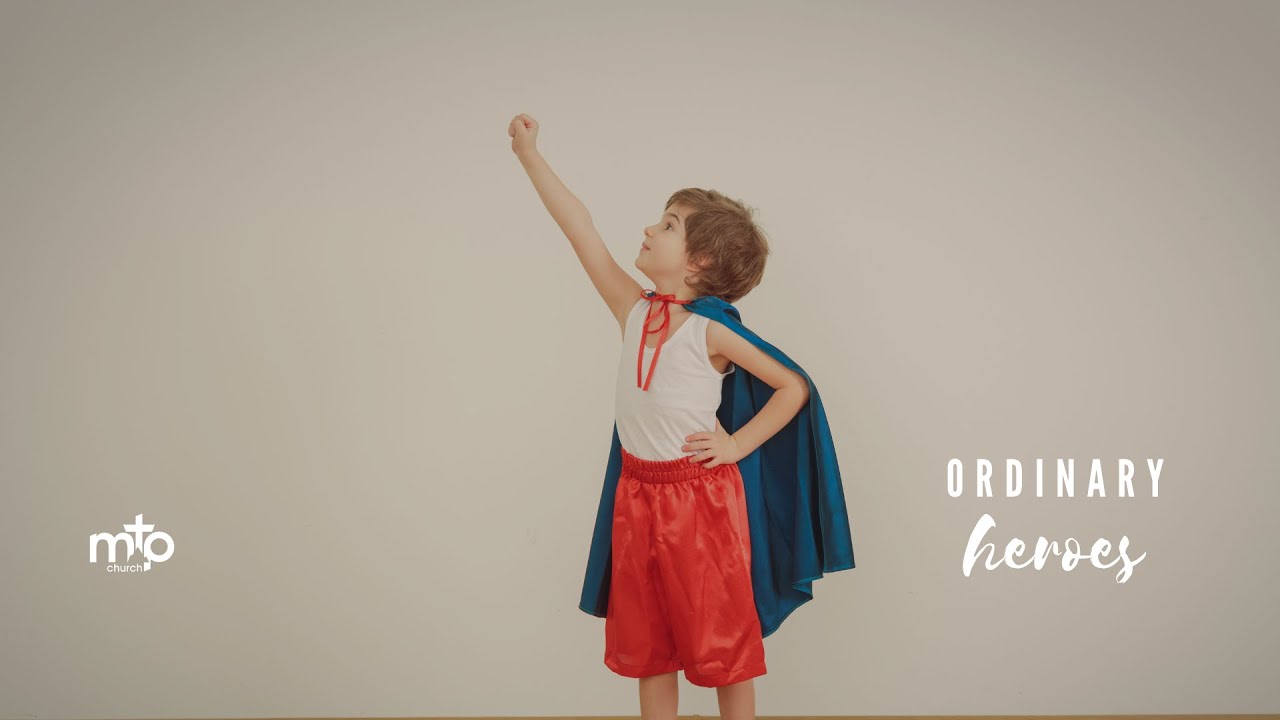
You don’t need to wear a cape or possess a superpower to make the world a better place.  To perform heroic acts, all you need is the willingness to make some major sacrifice, or even many small ones that add up over time.  Serving others builds relationships, spreads love, and creates a ripple effect.  The remarkable truth about helping others is that it invariably helps us as much, or more, than the people we are helping.  It builds our self-esteem.  That should not be the primary reason for wanting to improve other people’s lives.  But it’s a wonderful side-effect.

Harriet Quimby: Aviatrix One

By Rick Hutchins

In the early 20th Century, men and women were considered quite different animals and the social roles assigned to them reflected that belief. Women were expected to keep house and raise children while the adventures of invention and exploration were left to the men. Going beyond those expectations was not encouraged, and often punished. Most people conformed to those limitations, but some were not content to be grounded–- some, like Harriet Quimby, felt compelled to find new horizons.

Long before being bitten by the aviation bug, Quimby led an independent and liberated lifestyle that was the envy of many women of her day. An unmarried woman in New York City, she was a successful writer, turning out articles for the magazine Frank Leslie’s Illustrated Weekly for many years, as well as several screenplays for DW Griffith in the early days of Hollywood. She was an “old maid” of thirty-five when she attended an international aviation tournament on Long Island and met famous aviator John Moisant (whose sister was to quickly follow in Quimby’s footsteps). Her first flying lessons soon followed. A headline in The New York Times, typical of the attitudes of that era, stated “Woman in Trousers Daring Aviator; Long Island Folk Discover That Miss Harriet Quimby Is Making Flights at Garden City.”

A year later, in 1911 (more than a decade before Amelia Earhart), Quimby became the first woman in the United States to earn an aviator’s certificate. Her friend Matilde Moisant became the second shortly thereafter.

But Quimby was not yet finished with making history. The next year, in April of 1912 (the day after the sinking of the Titanic), she became the first woman to pilot an aircraft across the English Channel.

Sadly, her next milestone was a tragic one. In July of 1912, she attended, and participated in, The Third Annual Boston Aviation Meet at Squantum on Dorchester Bay. While circling Boston Harbor, with event organizer William Willard as a passenger, her plane experienced unexpected turbulence and both pilot and passenger fell to their deaths, the plane crashing on the beach.

A century has now passed since the untimely death of Harriet Quimby. The romantic figure of the first aviatrix in her distinctive purple flight suit is all but forgotten. But thanks to her and others like her, the opportunities for women in society have expanded to a degree that few in her lifetime would have believed possible. Yet it is still true, well into the 21st Century, that both women and men are pressed to limit themselves to roles defined by their gender. Most will conform. But some will not be content to be grounded. And thanks to those like Harriet Quimby, their flight may be a little smoother.

- – - – - – - – - – -

Rick Hutchins was born in Boston, MA, and has been an avid admirer of heroism since the groovy 60s. In his quest to live up to the heroic ideal of helping people, he has worked in the health care field for the past twenty-five years, in various capacities. He is also the author of Large In Time, a collection of poetry, The RH Factor, a collection of short stories, and is the creator of Trunkards. Links to galleries of his art, photography and animation can be found on http://www.RJDiogenes.com.

This is Hutchins’ fifth guest blog post here.  His first two, on astronaut and scientist Mae Jemison and the Fantastic Four’s Reed Richards,  appears in our new book Heroic Leadership: An Influence Taxonomy of 100 Exceptional Individuals.

Does the Villain’s Journey Mirror the Hero’s Journey?

By Scott T. Allison and George R. Goethals

In an earlier blog post, we outlined the various stages of the hero’s journey in mythology and literature as described in 1949 by Joseph Campbell.  In the prototypical hero story, he or she is called to an adventure, sometimes reluctantly, and is swept into another world fraught with danger.  In this strange world the hero undergoes many tests and trials, gets help from unlikely sources, and is often distracted by a romantic interest.  In the end, the hero overcomes great obstacles, returns home as a person transformed, and is the master of both worlds.  It is a timeless story structure that has assumed countless forms in hero tales across the globe.

But what of the villain?  Nearly every hero story has one, yet far less attention has been devoted to understanding the life story of the prototypical villain in myth and legend.  Do heroes and villains travel along a similar life path?  Or do villains experience a journey that is the inverse of that of the hero?

The answer to the first question appears to be, yes, there are parallels between the lives of heroes and villains.  Christopher Vogler, a noted Hollywood development expert and screenwriter, once wrote that villains are the heroes of their own journeys. Vogler believed that whether a character is working toward achieving great good or great evil, the general pathway is similar.  Both heroes and villains experience a significant trigger event that propels them on their journeys.  Heroes and villains encounter obstacles, receive help from sidekicks, and experience successes and setbacks during their quests.

While we do not disagree with this general parallel structure, we’ve observed that many stories portray villains as following the hero’s life stages in reverse.  We first came across this idea from writing expert Greg Smith, who found an interesting writer’s web discussion board post by an individual going by the username of RemusShepherd.  The idea is compelling:  Whereas heroes complete their journey having attained mastery of their worlds, the story often begins with villains possessing the mastery.  That is, hero stories often start with the villains firmly in power, or at least believing themselves to be superior to others and ready to direct their dark powers toward harming others.

Examples abound.  Consider the Wicked Witch in The Wizard of Oz, the shark in Jaws, Nurse Ratched in One Flew Over the Cuckoo’s Nest, Buffalo Bill in Silence of the Lambs, and Annie Wilkes in Misery.  In these examples, the story begins with the villain securely in power, the master of his or her world.  The heroes of these stories, in contrast, are weak and naive at the outset.  Only after being thrust into the villains’ worlds do these heroes gather the assistance, resources, and wisdom necessary to defeat the villains.

The villain’s story is thus one of declining power while the hero’s story is one of rising power.  But before this pattern is made clear, there must be one or more epic clashes between the hero and villain, with the hero embodying society’s greatest virtues and the villain embodying selfishness and evil.  In defeat, the villain’s mastery is handed over to the hero.  The villain’s deficiencies of character have been exposed; the hero’s deficiencies have been corrected.  The two journeys, one the inverse of the other, are completed.

And so here we see that Vogler and RemusShepherd may both be correct – heroes and villains may follow similar life journeys but these journeys are often staggered in time within the same story structure.  This temporal staggering may create the illusion that heroes and villains follow inverse paths.  Consider the opening act of a typical hero story; the naïve and deficient hero is just beginning his journey while the villain is at the height of his powers.  Movie franchises may later release prequels that reveal how the villain acquired such power in the first place.  In these prequels we witness a villain backstory that parallels the first movie’s portrayal of the hero’s journey.

A fine line often separates heroes from villains, a line that is clearly delineated in their opposing moral ambitions.  But the line can also be blurred when we recognize that all transforming journeys — whether for good or for evil — must share many common storytelling elements.

References

Allison, S. T., & Goethals, G. R. (2008). Deifying the Dead and Downtrodden:  Sympathetic Figures as Inspirational Leaders. In C.L. Hoyt, G. R. Goethals, & D. R. Forsyth (Eds.), Leadership at the crossroads: Psychology and leadership. Westport, CT: Praeger.

Allison, S. T., & Hensel, A. (2012).  Sensitivity to the changing fortunes of others.  Personality and Social Psychology Connections.

Goethals, G. R. & Allison, S. T. (2012).  Making heroes:  The construction of courage, competence and virtue.  Advances in Experimental Social Psychology, 46, 183-235.


- – - – - – - – - – - -

ReelHeroes.net — Our Analysis of Heroes in the Movies

By Scott T. Allison

My good friend Greg Smith and I have two things in common:  We love heroes and we love movies.  Greg is an expert in fictional writing and character development in storytelling.  I’ve been studying heroes for more than a decade and have published two books on the subject.  And so by establishing ReelHeroes.net, Greg and I couldn’t think of a better way to combine our interests and our expertise.

What is the mission of ReelHeroes.net?  Our goal is to critique the heroic characters in recent and classic movies.  Typically, movie reviewers focus on the quality of the movie.  We do that, too.  But we’ve found in our research that people need heroes.  Hero stories are psychologically important to us.  These tales educate, they inspire, and they entertain.  And the typical hero journey follows a classic pattern and a series of stages that are characteristic of all hero stories throughout the ages.

When movie-makers acknowledge these patterns, we usually get a satisfying movie-going experience. But when they ignore these ancient, time-honored paradigms, the story usually falls flat.  So at ReelHeroes.net, we’ll not only be able to tell you if a movie was good or bad, but we can also pinpoint where the hero-storytelling was good or not so good.

We base much of our hero analysis on the work of Joseph Campbell, a comparative mythologist who detected the following pattern in all hero stories:

(1) The hero starts out in a safe, familiar world.

(2) The hero is summoned, either willingly or unwillingly, into a new, dangerous, unfamiliar world.

(3) The hero is charged with some goal or mission.

(4) The hero encounters other people who fill important social roles — mentors, lovers, villains, sidekicks, & father figures are common.

(5) The hero then overcomes some missing internal quality to attain the goal.

(6) The hero is transformed significantly and returns to the familiar world.

(7) And then the hero delivers the meaning of the journey.

Greg has used this pattern extensively in Agile Writers to help his students compose effective and entertaining novels.  In the past few years, he’s helped people compose over a dozen first drafts and several self-published books.  They’ve all relied on these tried-and-true stages of the hero journey.  Two members of the Agile Workshop have been nominated for the coveted James River Writer Best Unpublished Novel Contest.

At ReelHeroes.net, we will sometimes refer to other hero models in our reviews.  Paul Moxnes has a model based on family structure, arguing that heroes emerge within a family hierarchy (e.g., Fathers, Mothers, Sons, Daughters, Servants, etc).  In our own research on heroes, we’ve found that heroes tend to possess The Great Eight characteristics.  Heroes are smart, strong, selfless, caring, resilient, charismatic, reliable, and inspiring.

It’s our goal to review mainstream movies that people who appreciate a hero analysis will want to see. We may even occasionally review old classic movies with an especially strong hero story. We’ll avoid genres such as horror or slapstick comedy (although we confess to being avid Three Stooges fans). We love to review bad films as much as good films because it gives us a chance to see where the artist deviated from the acknowledged structures (and wonder how in the world did this film get made!).

So join us as we explore the hero journey in action on the big screen.  We use the word “action” deliberately, as the work of any good hero involves acts of good deeds.  As Robert Downey, Jr., once observed, “Hero is not a noun, it’s a verb.”

- – - – - – - – - – - – - – -

Can Dogs be Heroes? The Day A Dog Saved Me

By Scott T. Allison

One of the most memorable moments of my life occurred when I was about 10 years old.  At that time, I walked about one mile each day to school – Woodlake Avenue Elementary School, located in the suburbs of Los Angeles, California.   I just googled the school and sure enough, 40 years later, it’s still there.

One morning I was walking to school and was no more than a block away from home when suddenly, seemingly out of nowhere, I was startled to see a large, brown, and very angry dog running directly at me at full speed.  I stopped in my tracks, terrified.  The dog rushed at me with fuming growls, snarling teeth, and unmistakable hostility. There was absolutely nowhere for me to run or escape.  No tree to climb, no shelter available.  I was sure that I was about to be ripped to pieces.

When the dog was about ten feet from me, a second astonishing thing happened.

From the right, another dog, a different breed but just as big, appeared.  This second dog also seemed to appear out of nowhere, and it instantly positioned itself between me and the attacking dog.  The second dog snarled and barked at the first dog and did not allow it to harm me.  The two dogs squared off, barking and growling at each other.  Each time the first dog tried to lunge at me, the second one cut it off and sent the attacking animal backwards.

Perhaps 15 seconds passed as I watched in amazement, and relief.  One dog was doing everything it could to save me from another.  I gradually recovered from the shock of the situation and resumed my walk to school, at a quick pace, looking back over my shoulder to see what was happening.  When the first dog attempted to follow me, the second one blocked its path.  The two dogs continued to bark and snarl at each other, and soon their noises faded and they were both out of sight.

One remarkable fact about this incident is that I had never seen either dog before that day.  And I never saw them again afterward.  Where in the world had they come from?  And where did they go?

A skeptic might say that the second dog was not protecting me.  Perhaps I just happened to get caught in the middle of a showdown between the two canine superpowers in the neighborhood.

I’m certain this isn’t the case.  I am absolutely sure that the first dog was directing its anger at me, and me alone.  It had made a bee-line toward me, it made clear eye contact with me, and it’s intention was to do harm to me.  And I am equally certain that the second dog’s sudden intervention surprised the first dog as much as it surprised me.  That big beautiful second dog simply would not allow the first animal to hurt me.  There is no doubt in my mind that second animal arrived on the scene to protect me.

There is one intuitive gut feeling about this incident that I must also share.  And I must confess that while this is a leap of inference from the facts that I have just described, it is a powerful feeling that I can’t dismiss.  As I stood there, amazed that a second dog had arrived to thwart the attack, I could sense an amazing presence of love and goodness in that second dog.  It was doing everything in its power to save me and protect me.  I sensed pure selfless love.

I felt, and still feel, overwhelming gratitude toward this altruistic being.

- – - – - – -

For the past three years, I’ve had Google send me every online story it can find involving a hero saving someone’s life.  Every day I get stories from all over the world.  The vast majority are stories of humans saving humans.  But several times each month, there is a story about a dog saving a human life.  A dog who barks in the night to wake her owner because of smoke in the house.  A dog who drags another injured dog off of busy highway.  A dog who alerts someone when his owner falls unconscious.

Yes, there are cat hero stories, too, but they are far fewer in number.  Dogs seem to be hardwired to love and protect people, and there are numerous stories of dogs saving people.  Some of them are amazing and quite moving.  You can read some of these stories here, and other ones here.

Do you have a story about someone who has saved you?  I’d love to hear about it.  It doesn’t matter to me if the creature saving you was a human being, an animal, a god, or a martian.  I’m interested.

- – - – - – - – - -

You can contact Scott Allison at sallison@richmond.edu.

The Everyman Superhero in Three Recent Films

By Greg Smith

At Agile Writers we are guided by the principles of storytelling that were exposed by Joseph Campbell in The Hero With A Thousand Faces.   In it, a hero (the central character) has a missing inner quality and must go on a journey to discover that quality and satisfy it.  The hero starts out in his ordinary world where “something happens” that pushes him into some other “special world” where he meets friends and enemies.  He accomplishes some goal and in so doing he fulfills his missing inner quality.

The classic super hero story is often just such a journey.  The hero has some character flaw that is exposed early in the story.  The hero attains a power that throws him into a special world of being “super.”  He spends the next part of the story learning how to master the power.  By the end of the first 30 minutes of the film, our hero has mastered his powers and he has an enemy to overcome.  Meanwhile, we’ve also learned that the hero has a severe inner pain that must be salved.  And we’re off.

Today I’d like to look at three very similar films.  These films depict ordinary people who take up the cause of the super hero and attempt to right the wrongs of society from behind the mask.

In Kick-Ass (2010) we meet young Dave Lizewski (Aaron Johnson) who has all the problems of the typical teenager.  He wants to meet girls, he gets his lunch money stolen by older boys, and he feels powerless in a world of adults.  Dave becomes so tired of being a victim and of watching others play the victim that he dons a green scuba outfit and becomes Kick-Ass the crime fighter.  He confronts the local hoodlums who quickly stab him and throw him under a bus.  Dave undergoes multiple surgeries to reinforce his bones with steel and as a result of his accident he has a reduced sensation to pain.  He befriends other local self-made heroes and takes on the crime syndicate.

In Super  (2010) we’re introduced to Frank Darbo (Rain Wilson) who is a thirty-something short order cook.  He’s done little with his life – so little in fact that the two main events of his life are getting married to his lovely wife (Liv Tyler) and pointing out a thief at a fruit stand.  His recovering addict wife of seven years leaves him for Jacques (Kevin Bacon) who supplies her with drugs.  Frank becomes inspired by watching late night Christian broadcasts depicting a super hero who leads children away from the devil and into a life of righteous living.  Frank decides that he is going to recover his wife by becoming the Crimson Bolt.  He befriends a young girl who clerks at the local comic-book store and together they take on the local drug syndicate.

From Australia comes Griff the Invisible (2010), the story of an ordinary office worker who believes that he has harnessed the power of invisibility.  Griff (Ryan Kwanten) dons a black scuba suit and lurks around at night looking for evil-doers. Along the way he meets a pretty girl who recognizes Griff for his ability to maintain a child-like innocence and sense of wonder.
What these characters have in common is a sense of powerlessness.  They feel so powerless, in fact, that the only way they can overcome it is if they cocoon themselves in garb and mask and change their identities.

Unlike the super heroes of comics and film, they aren’t hiding their identities to protect those they love, but to protect themselves from detection.  Once hidden, they are able to distance themselves from the limitations they feel when they are their ordinary selves.

And that is the message of these films. We each have the capacity to go beyond who and what we are right now.  The things that often hold us down are the preconceptions that we have about ourselves, and the prejudging that others impose upon us.  When these heroes don the mask and cape, they isolate and separate themselves from these limitations.  They are telling us that when we ignore the ties that society uses to bind us, and we unleash ourselves from our self-imposed limitations, we each become super.

Kick-Ass, Super, and Griff all follow super hero patterns that you’ll recognize.  There is an origin story, the definition of the villain, a pretty girl to acquire, a deep disappointment followed by a gathering storm and finally a climactic battle to set things right.  What is different about these films from other super hero films is that in the end, each hero returns to his origin:  ordinary, healed, and newly super.
- – - – - – - – -
This essay is reprinted from Matthew Killorin’s excellent Capes on Film blog.  Greg Smith founded Agile Writers in 2011 with the mission to discover a method for helping beginning writers complete a first-draft novel in 6 months.  The Agile Writer Method is based upon the writings of experts in mythology, screenwriting, and psychology. His seminars on the Agile Writer Method have delighted hundreds of writers, scholars, and university students.  In 2012 Agile Writers completed 12 first draft novels, 5 published novels, and two members of the Workshop have been nominated for the coveted James River Writer Best Unpublished Novel Contest.

Heroes of 9/11: The Passengers and Crew of United 93

By Scott T. Allison and George R. Goethals

As we approach the 12-year anniversary of the September 11th attacks, Americans continue to experience a range of strong emotions.  There remains deep sadness about the losses suffered that day.  There is still anger at the people who perpetrated the assaults, and the toxic mix of political, theological and economic conditions that fed their hatred.  And there continue to be reaffirmations of the goodness, resilience and courage of America and its citizens.

One of the ways we have coped with the tragedy is to remember the heroes who stepped forward that day.  Many paid the ultimate price to combat the terror and help us get back on our feet.  In the words of Abraham Lincoln, “they gave the last full measure of devotion.” There were numerous such heroes in New York and Washington, DC.  But few made as much difference as the passengers on United 93.  Their story will be remembered for as long as this nation survives.

United Airlines Flight 93 was bound from Newark, New Jersey to San Francisco that brilliant Tuesday morning.  It was delayed for about 45 minutes due to air traffic congestion, finally taking off at 8:42 AM.  Four hijackers began their takeover at 9:28 AM.  By that time the two flights from Boston had crashed into the World Trade Center.  The Pentagon would be hit in a few minutes.

During the hijacking itself, the four men apparently killed the pilot and co-pilot, and herded the passengers into the back of the aircraft.  Luckily, some passengers and flight attendants were able to use cell phones or airphones to call family members or contact GTE operators.  Slowly, what had happened at the World Trade Center and the Pentagon came into focus.

Many passengers’ relatives tried to console their loved ones, and saying that everything would be okay.  Intense fear very frequently leads to denial.  Initially both those in the air and those on the ground had difficulty coming to terms with the fact that the plane was on a suicide mission.  Once that was clear – and it became clear to those on the plane before those on the ground – the passengers reacted quickly.  It’s a good thing.  When the plane crashed, it was only twenty minutes from Washington, DC.

We don’t know who organized the counterattack.  It began at 9:57 AM.  The passengers voted to break into the cockpit to try to retake control of the plane.  Flight attendants helped.  One called her husband and told him that they were preparing boiling water to throw at the hijackers.  And we don’t know exactly how the passengers overwhelmed the hijackers and breached the cabin.

But the last words of one man are iconic.  They were overheard by the GTE operator he had reached by airphone:  “Are you guys ready?  Okay.  Let’s roll.”  It sounds like a line from a movie, but it happened to real people acting under the most terrifying circumstances imaginable.  They knew they were going to die.  But they wanted to prevent more death and destruction in the nation’s capital.

Most experts believe that United 93′s target was the Capitol building itself, though it may have been the White House or Camp David.  The hijackers’ mission failed due to acts of heroism that are as unalloyed as they come.  The nation will be forever grateful to the heroes of United 93.

- – - – - – - – - -

Do you have any heroes you would like us to profile?  If so, please contact Scott Allison as sallison@richmond.edu.

Our Second Book — Heroic Leadership

By Scott T. Allison and George R. Goethals

We’re happy to announce that our second book, Heroic Leadership, published by Routledge, is now available.

In Heroic Leadership, we review the relationship between leadership and heroism, showing how our most cherished heroes are also our most transforming leaders.  We also describe in some detail a taxonomy, or conceptual framework, for differentiating among the many varieties of heroism.  Moreover, the book profiles many different individual heroes and provides an analysis of their heroic contributions.

Here’s what several distinguished reviewers have said about Heroic Leadership:

A pioneering and insightful examination of the intersection of heroes and leaders by two gifted psychologists.  Allison and Goethals’ captivating narrative  adds a new dimension to current research on leadership.”
JAMES MacGREGOR BURNS, Pulitzer Prize winning Professor Emeritus at Williams College and Distinguished Leadership Scholar at the James MacGregor Burns Academy of Leadership of the School of Public Policy at the University of Maryland.

* * * *

“Allison and Goethals’ stimulating and incisive survey of one-hundred influential leaders could not be more cogent or timely.  When so many of our leaders seem to have feet of clay and principles that bend with the prevailing breezes, they remind us of those leaders who rose to the occasion and stood firm in their moment of decision. As a result, they and their leadership have stood the test of time.  Heroic Leadership offers a refreshingly original and provocative perspective on what it means to be a great leader. Reading this book not only informs us, it also inspires!  My only suggestion would be that we expand their list to 102 — adding their names in appreciation of their heroic scholarly labors!”

RODERICK M. KRAMER, Professor of Organizational Behavior, Stanford University

* * * *

“Scott Allison and  George Goethals are pioneering scholars exploring the psychology of heroism and leadership, and this book outlines their contention that while all heroes are leaders, the converse is not true. They make their case by offering snapshots of 100 characters, some fictional (e.g., King Lear), some collective (e.g., Chilean miners, Power Rangers), and some surprising (e.g., Lady Gaga, Meryl Streep) who instantiate their taxonomy of heroes. For researchers and lay people alike, this book is packed with fascinating insights into the psychology of leadership, heroism, and mere celebrity. It is a book to be enjoyed by everyone who wonders why some people attract public attention, and others, who may deserve it (e.g., parents, soldiers, teachers) do not.”

DAVID M. MESSICK, Professor Emeritus at Northwestern University

* * * *

Presenting vivid accounts of distinguishable forms of heroism, this is a welcome contribution to understanding heroic aspects of leader-follower relations. It deserves a place as a text, reference source, and feast of revealing narratives. The accounts chosen capture what individuals’ special qualities underlie and activate others’ sense of the “heroic,” based on five factors affecting a leader’s influence. This yields ten types of heroes that are profiled, from trending and transitory to transforming and transcendent. Among those receiving attention in this cavalcade are the tragic, (Oedipus, Tiger Woods, Richard Nixon), and many shown as the “moral,” (e.g., The Dalai Lama, Mother Teresa, Rosa Parks). Insightful analyses of individual cases provide an illuminating blend of scientific scrutiny with compelling storytelling.

EDWIN P. HOLLANDER, Professor Emeritus, CUNY, Baruch College, and University Graduate Center

Night Witches: The Forgotten Aviatrixes

By Jesse Schultz

There was a controversy in the early 1990s. U.S. Secretary of Defense Les Aspin announced in 1993 that for the first time in US history, women would be allowed to fly combat missions. It was a field that was traditionally dominated by men and by that date there were still many who felt that it should remain that way. The debate played out in the nightly news and in television shows ranging from JAG to Northern Exposure. Even a close family member of mine, who was a veteran of the second World War and had a long Naval career, expressed mild opposition to it.

But it was a controversy that should never have happened for the simple reason that woman had flown combat missions before and had done it successfully during World War II. Not in the United States, where most are aware of the non-combat Women’s Army Corp (or WACs), but in the Soviet Union.

In the summer of 1941 Russian aviatrix Marina Raskova was tasked with forming a regiment of night bombers to conduct strikes against German positions. This tactic was known as harassment bombing. Raskova in turn formed a unit composed entirely by women, from the mechanics to the pilots themselves and the 588th Regiment was born.

During the course of the war the squadron would fly some 23,000 sorties and drop an estimated 3000 tons of bombs. Impressive for a regiment that at its height only had 40 two-person crews. Impressive enough that it was the Germans who gave them their name:  Nachthexen, or Night Witches. Even more amazing was that the Night Witches were given obsolete Polikarpov Po-2 biplanes, aircraft that were originally designed for crop dusting and training, to conduct their operations in.

And really this is where the Night Witches were truly inspirational. Not only because they were among the first at something, or unsung, or overcame adversity (though they deserve recognition for all of that).  It is because they turned that adversity into advantage. While the Po-2s were slow, lightly armed, and vulnerable the Night Witches found that they did have their advantages. The slow air speed of the plane often placed them below the stall speed of the German fighters sent to attack them. The slow speed also allowed the pilots to fly close to the ground and use trees and buildings as cover. And being biplanes the Night Witches could shut their engines off and silently glide to their targets, effectively performing some of the first stealth bombing missions. The Germans would often have no idea an attack was coming until the bombs were dropping.

By the end of the war, 30 members of the Night Witches had died in combat and 23 were awarded the Hero of the Soviet Union title, the highest distinction in the Soviet Union at the time.

However, after the end of the war the women pilots found their opportunities increasingly limited. Politics of the Cold War kept their exploits from western attention. But as their lesson is now too late for the debate of 1993, we can still learn from them and others who went before. Whenever a society or a culture or a stereotype insists that this group or that group cannot do something there will always be an example from history to refute the notion. Be it an ethnic group striving for new opportunities, or a religion group seeking to live their lives peacefully, or a gender who can defend their country with the same valor as their counterparts.

- – - – - – - – - – -

The author, Jesse Schultz, is a life long admirer of aviation, history, and women- though not necessarily in that order. His previous musings on heroism include Love Thy Enemy: Opposing HeroesHis previous blogs on Merlin and The Makers of Fire will appear in our new book Heroic Leadership: An Influence Taxonomy of 100 Exceptional Individuals.