Heroism Phenomena Identified by Scott Allison’s Research Lab 2005-Present

Below is a partial listing of heroism-related phenomena discovered by Dr. Scott T. Allison’s research lab from 2005 to the present day.

1. The Death Positivity Bias – 2005

DEFINITION: The tendency of people to evaluate the dead more favorably than the living. This is one way we “heroize” people.

Allison, S. T., & Eylon, D. (2005). The demise of leadership: Death positivity biases in posthumous impressions of leaders. In D. Messick & R. Kramer (Eds.), The Psychology of Leadership: New Perspectives and Research (pp 295-317). New York: Erlbaum.

Allison, S. T. (2024). Death positivity bias and heroism. In S. T. Allison, J. K. Beggan, and G. R. Goethals (Eds.), Encyclopedia of Heroism Studies. New York: Springer.

2. The Frozen in Time Effect – 2005

DEFINITION: People’s tendency to resist changing their impressions of dead heroes compared to living heroes.

Eylon, D., & Allison, S. T. (2005). The frozen in time effect in evaluations of the dead. Personality and Social Psychology Bulletin, 31, 1708-1717.

Allison, S. T. (2024). Frozen in time effect and heroism. In S. T. Allison, J. K. Beggan, and G. R. Goethals (Eds.), Encyclopedia of Heroism Studies. New York: Springer.

3. The Underdog Abandonment Effect – 2008

DEFINITION: The tendency of people to no longer root for underdog heroes when both their success has low self-relevance and low consequences.

Kim, J., Allison, S. T., Eylon, D., Goethals, G., Markus, M., McGuire, H., & Hindle, S. (2008). Rooting for (and then Abandoning) the Underdog. Journal of Applied Social Psychology, 38, 2550-2573.

4. The Great Eight Traits of Heroes – 2011

DEFINITION: The discovery that people believe that heroes possess the traits of wise, strong, charismatic, caring, resilient, reliable, selfless, and inspiring.

Allison, S. T., & Goethals, G. R. (2011). Heroes: What they do and why we need them. New York: Oxford University Press.

5. Social Influence Based Taxonomy of Heroism – 2012

DEFINITION: The scientific identification of heroes as Transforming, Transfigured, Traditional, Transparent, Transposed, Tragic, Transitional, Transitory, Trending, and Transcendent.

Allison, S. T., & Goethals, G. R. (2013). Heroic leadership: An influence taxonomy of 100 exceptional individuals. New York: Routledge.

6. The Heroic Leadership Dynamic – 2014

DEFINITION: A system of psychological forces that can explain how humans are drawn to heroes, how they benefit from these heroes and their stories, and how heroic tales help people become heroes themselves.

Allison, S. T., & Goethals, G. R. (2014). “Now he belongs to the ages”: The heroic leadership dynamic and deep narratives of greatness. In Goethals, G. R., et al. (Eds.), Conceptions of leadership: Enduring ideas and emerging insights. New York: Palgrave Macmillan.

7. Epistemic and Energizing Functions of Heroism – 2014

DEFINITION: The conceptualization of the functions of heroism that includes epistemological needs involving the imparting of wisdom and emerging needs involving healing, growing, and inspiration.

Allison, S. T., & Goethals, G. R. (2014). “Now he belongs to the ages”: The heroic leadership dynamic and deep narratives of greatness. In Goethals, G. R., et al. (Eds.), Conceptions of leadership: Enduring ideas and emerging insights. New York: Palgrave Macmillan.

8. Need-Based Heroism (AKA The Johnny Carson Effect) – 2014

DEFINITION: The tendency of people’s current need states to determine their choice of heroes, with these need-states changing as a function of people’s developmental stages and their changing life circumstances. (named after Johnny Carson’s quip that after all his divorces, his hero changed from Babe Ruth to King Henry VIII)

Allison, S. T., & Goethals, G. R. (2016). Hero worship: The elevation of the human spirit. Journal for the Theory of Social Behaviour, 46, 187-210.

Allison, S. T. (2024). Need-based heroism. In S. T. Allison, J. K. Beggan, and G. R. Goethals (Eds.), Encyclopedia of Heroism Studies. New York: Springer.

9. Six Benefits of Suffering – 2016

DEFINITION: The identification of benefits of heroic suffering as offering (1) redemption, (2) developmental progress, (3) humility, (4) compassion, (5) social union, and (6) meaning and purpose.

Allison, S. T., & Setterberg, G. C. (2016). Suffering and sacrifice: Individual and collective benefits, and implications for leadership. In S. T. Allison, C. T. Kocher, & G. R. Goethals (Eds), Frontiers in spiritual leadership: Discovering the better angels of our nature. New York: Palgrave Macmillan.

Allison, S. T. (2024). Suffering of the hero. In S. T. Allison, J. K. Beggan, and G. R. Goethals (Eds.), Encyclopedia of Heroism Studies. New York: Springer.

10. Six Types of Heroic Transformation – 2017

DEFINITION: Six commons patterns of transformation in heroes that involve changes in their mental, emotional, physical, spiritual, moral, and motivational state.

Allison, S. T., Goethals, G. R., & Kramer, R. M. (2017). Setting the scene: The rise and coalescence of heroism science. In S. T. Allison, G. R. Goethals, & R. M. Kramer (Eds.), Handbook of heroism and heroic leadership. New York: Routledge.

Allison, S. T. (2024). Heroic transformation. In S. T. Allison, J. K. Beggan, and G. R. Goethals (Eds.), Encyclopedia of Heroism Studies. New York: Springer.

11. Three Heroic Transformative Arcs – 2017

DEFINITION: The tendency of heroes to transform from a state of egocentricity to sociocentricity; from dependence to autonomy; and from stagnation to growth.

Allison, S. T., & Goethals, G. R. (2017). The hero’s transformation. In S. T. Allison, G. R. Goethals, & R. M. Kramer (Eds.), Handbook of heroism and heroic leadership. New York: Routledge.

12. The Personal Heroic Imperative – 2018

DEFINITION: Each human being’s built-in mandate to fulfill their heroic imperative by imagining and creating their own heroic growth.

Efthimiou, O., Allison, S. T., & Franco, Z. E. (2018). Heroism and wellbeing in the 21st century: Recognizing our personal heroic imperative. In O. Efthimiou, S. T. Allison, & Z. E. Franco (Eds.), Heroism and wellbeing in the 21st Century: Applied and emerging perspectives. New York: Routledge.

13. Transcendent and Trapped Immortality – 2018

DEFINITION: The tendency of people to perceive dead heroes and villains differently. Specifically, we believe deceased good-doers achieve transcendent immortality, with their souls persisting beyond space and time; and evil-doers to have trapped immortality, with their souls persisting on Earth, bound to a physical location.

Gray, K., Anderson, S., Doyle, C. M., Hester, N., Schmitt, P., Vonasch, A., Allison, S. T., and Jackson, J. C. (2018). To be immortal, do good or evil. Personality and Social Psychology Bulletin, 44, 868-880.

Allison, S. T. (2024). Transcendent immortality and heroism. In S. T. Allison, J. K. Beggan, and G. R. Goethals (Eds.), Encyclopedia of Heroism Studies. New York: Springer.

14. Heroic Lag – 2019

DEFINITION: The delay between the point in time when a hero first expresses their heroic message and when mainstream society adopts that message.

Goethals, G. R., & Allison, S. T. (2019). The romance of heroism and heroic leadership: Ambiguity, attribution, and apotheosis. West Yorkshire: Emerald.

Allison, S. T. (2024). Heroic lag. In S. T. Allison, J. K. Beggan, and G. R. Goethals (Eds.), Encyclopedia of Heroism Studies. New York: Springer.

15. Heroic Consciousness – 2019, 2024

DEFINITION: Heroic consciousness is a state of heightened awareness, reasoning, emotional experience, self-identity, intention, and will, all aimed at saving lives, pursuing a noble cause, and promoting the greater good.

Allison, S. T. (2019). Heroic consciousness. Heroism Science, 4, 1-43.

Allison, S. T. (2024). Heroic consciousness. In S. T. Allison, J. K. Beggan, and G. R. Goethals (Eds.), Encyclopedia of Heroism Studies. New York: Springer.

16. Seven Barriers to Heroic Transformation – 2019

DEFINITION: Seven ways people avoid heroic transformation: self-ignorance, impoverished environments, personal trauma, victim identification, absence of mentors, mental/physical illness, and lack of psychological flexibility.

Allison, S. T., Goethals, G. R., Marrinan, A. R., Parker, O. M., Spyrou, S. P., Stein, M. (2019). The metamorphosis of the hero: Principles, processes, and purpose. Frontiers in Psychology, 10, 606.

17. Heroic Leadership Imperative – 2020

DEFINITION: The mandate of transforming heroic leaders to meet the individual, collective, and transcendent needs of their followers.

Allison, S. T. & Goethals, G. R. (2020). The heroic leadership imperative: How leaders inspire and mobilize change. West Yorkshire: Emerald.

18. Heroic Wholeness Imperative – 2020

DEFINITION: The mandate of leaders to promote psychological wholeness and well-being by meeting the higher-level transcendent needs of followers.

Allison, S. T. & Goethals, G. R. (2020). The heroic leadership imperative: How leaders inspire and mobilize change. West Yorkshire: Emerald.

19. The Hero Androgyny Phenomenon  — 2020

DEFINITION: The tendency of heroes to possess both masculine and feminine traits, i.e., agency plus communality.

Hoyt, C. L., Allison, S. T., Barnowski, A., & Sultan, A. (2020). Lay theories of heroism and leadership: The role of gender, communion, and agency. Social Psychology, 51, 381-395.

20. Puer Aeternus as an Obstacle to Heroism

DEFINITION: The Puer Aeternus complex describes an adult, often a man, who remains in an extended state of adolescence, exhibiting traits commonly associated with youth. The phenomenon represents a significant barrier to personal growth and heroism due to its characteristic evasion of the hero’s journey that transforms people into their best, most heroic selves.

Allison, S. T., Goethals, G. R., & Spyrou, S. P. (2020). Donald Trump as the archetypal puer aeternus: The psychology of mature and immature leadership. In K. Bezio & G. R. Goethals (Eds.), Leadership, populism, and resistance. Northampton, MA: Edward Elgar.

21. Heroic Autonomy  — 2021

DEFINITION: The imperative of the hero to perform the last and most crucial heroic act alone and independent from their friends and mentors.

Allison, S. T. (2021). Beth Harmon’s hero’s journey: The psychology of heroism in The Queen’s Gambit. Richmond: Palsgrove.

22. Heroic Balance  — 2021

DEFINITION: The ability of the hero to achieve a healthy life balance needed to achieve their heroic mission. Heroes needs to balance intuition with reason; emotion with logic; self-confidence with humility; autonomy with dependency; personal life with professional life; and more.

Allison, S. T. (2021). Beth Harmon’s hero’s journey: The psychology of heroism in The Queen’s Gambit. Richmond: Palsgrove.

23. Dynamic Negotiated Exchange Theory of Heroism –2022

DEFINITION: The dynamic negotiated exchange model of heroism refers to the processes by which the implicit exchange agreement between heroes and hero beneficiaries undergoes change. The change is often negotiated in response to a major crisis, such as the COVID pandemic of 2020-22.

Allison, S. T., & Beggan, J. K. (2022). The dynamic negotiated exchange model of heroism and heroic leadership: Lessons from the COVID-19 pandemic. Interdisciplinary Journal of Leadership Studies, 1, 15-31.

24. Motional Intelligence — 2023

DEFINITION: A form of kinesthetic intelligence that enables leaders to move the emotions of their followers. It is the ability of heroic (and villainous) leaders to use their body movements and voices effectively in a way that inspires and mobilizes followers.

Allison, S. T. (2023). Motional intelligence and leadership. In G. R. Goethals, S. T. Allison, & G. J. Sorenson (Eds.). The SAGE Encyclopedia of Leadership Studies. Sage: Thousand Oaks, CA.

25. Hero Illiteracy — 2024

DEFINITION: The lack of knowledge about heroism, or a misunderstanding about what comprises heroism. The condition can afflict an individual or an entire society. It can include an inability to distinguish heroes from villains and an erroneous belief that money, fame, and celebrity status are the determinants of heroism.
.
Allison, S. T., & Beggan, J. K.  (2024). Hero Illiteracy. In S. T. Allison, J. K. Beggan, and G. R. Goethals (Eds.), Encyclopedia of Heroism Studies. New York: Springer.
.
26. Heroism Attribution Error – 2024
.

DEFINITION: The tendency of people to confuse fame for heroism, such that they attribute heroism to celebrities who are famous for non-heroic reasons.

Allison, S. T. (2024). Heroism attribution error. In S. T. Allison, J. K. Beggan, and G. R. Goethals (Eds.), Encyclopedia of Heroism Studies. New York: Springer.

27. Intuitive Heroism — 2024

DEFINITION: Intuitive heroism refers to how individuals naturally and intuitively make sense of heroism. People have their own ideas about what heroes do, what heroes are like, and what motivates heroism. These intuitive notions of heroism are accurate in some ways but also contain factual errors and misunderstandings about heroism.

Allison, S. T. (2024). Intuitive heroism. In S. T. Allison, J. K. Beggan, and G. R. Goethals (Eds.), Encyclopedia of Heroism Studies. New York: Springer.

28. Perfect Confluence and Heroism — 2024

DEFINITION: The “perfect storm” is a term often used metaphorically to describe situations where a convergence of multiple factors leads to a particularly significant or catastrophic outcome. The perfect confluence refers to any convergence of circumstances that results in a particularly positive or heroic outcome.

Allison, S. T. (2024). Perfect storm, perfect confluence, and heroism. In S. T. Allison, J. K. Beggan, and G. R. Goethals (Eds.), Encyclopedia of Heroism Studies. New York: Springer.

29. Heroism-by-Proxy — 2024

DEFINITION: Heroism-by-proxy describes a psychological phenomenon that occurs when an individual develops a strong psychological association with a hero or a heroic figure, leading to a sense of personal heroism. Heroism-by-proxy can be constructive when it inspires heroism but can be destructive when it engenders either complacency or a psychological identification with violent, divisive leaders.

Allison, S. T., Beggan, J. K., & Goethals, G. R. (2024). Heroism-by-Proxy. In S. T. Allison, J. K. Beggan, and G. R. Goethals (Eds.), Encyclopedia of Heroism Studies. New York: Springer.

30. Amalgamated Heroes — 2024

DEFINITION: An amalgamated hero is a legendary, cultural hero who is derived from a complex blending of similar historical figures and our own cognitive embellishments of those figures.

Allison, S. T. & Hutchins, R. (2024). Amalgamated heroes. In S. T. Allison, J. K. Beggan, and G. R. Goethals (Eds.), Encyclopedia of Heroism Studies. New York: Springer.

31. Chrono-Archetypes — 2025

DEFINITION: Chrono-archetypes are symbolic inner personas grounded in Zimbardo’s Time Perspective Theory. They are dynamic, narrative-based identities (e.g., Legacy Keeper, Visionary, Wounded Historian) that respond to everyday “calls to action,” including ethical dilemmas, crises, and opportunities for prosocial innovation.

Allison, S. T. (2025). Temporal identities and moral courage: A chrono-archetype model of workplace heroism. Journal of Organizational Psychology, 25(3), 129-145.

32. The Glass Mask Phenomenon — 2026

DEFINITION: The Glass Mask describes a subtle imbalance in how leadership is perceived: the same movements that help men be seen as both capable leaders and admirable figures do not always carry the same meaning when expressed by women. By weakening the natural link between authority and admiration, the Glass Mask makes women’s leadership less immediately recognizable as heroic and more likely to be viewed through caution or constraint.

Allison, S. T., & Goethals, G. R. (2026). Motional Intelligence: The Power of Movement in Leadership. Emerald.

The Impossible Dream: A Love Song to the Human Spirit

Being Heroic is Always Possible

By Scott T. Allison

Some songs reach beyond melody — they reach into our souls. The Impossible Dream, from Man of La Mancha, is one of those rare pieces of music that transcends time and genre. When Don Quixote declares his intention “to fight the unbeatable foe” and “reach the unreachable star,” we feel the pull of something deeply human — the yearning to live with purpose, integrity, and heart.

At first, Quixote’s dream seems absurd. Why chase what you can’t catch? Why take on battles that can’t be won? Yet that’s exactly what makes his dream so profoundly heroic. True heroism has never been about victory; it’s about perseverance, conviction, and the courage to act even when success seems impossible.

Psychologists describe everyday heroes as ordinary people who step forward when others stand aside. They act not because they are fearless, but because their conscience leaves them no choice. The Impossible Dream captures this quiet defiance perfectly — it’s a love song to the human spirit, to our stubborn belief that goodness still matters and that one person’s action can make a difference.

When we listen, we don’t just admire Quixote’s idealism; we join him in it. The song invites each of us to imagine what courage might look like in our own daily lives — speaking truth when silence feels safer, offering kindness in a cynical world, holding fast to compassion when it would be easier to walk away.

This kind of heroism — what psychologists call moral courage — surrounds us more than we realize. It’s visible in the nurse who keeps showing up through exhaustion, the teacher who protects a vulnerable student, the neighbor who stands up against hate. These people may never call themselves heroes, but their actions echo the same timeless call: to live with heart, no matter the cost.

Beneath its stirring lyrics, The Impossible Dream reminds us of a truth Viktor Frankl once wrote about: that meaning is what makes endurance possible. To “dream the impossible dream” is to keep believing that our lives, however small they seem, can help tilt the world a little more toward light.

Perhaps that’s why the song still moves people generations later. It speaks to something eternal in us — the desire to strive, to love, and to serve, even when the odds are steep. To chase the unreachable star is not to be delusional; it’s to live with purpose. It’s to see ourselves as part of something larger and nobler than our own comfort.

So when the world feels heavy, remember Don Quixote’s anthem. Sing it — loudly, imperfectly, unapologetically. Because the act of reaching, even when the goal is distant, is what makes us most human.

And that, in the end, is the most heroic dream of all.

References

Franco, Z., & Zimbardo, P. (2006). The banality of heroism. Greater Good, 3(2), 30-35.

Franco, Z. E., Allison, S. T., & Riches, B. R. (2025). Honoring Philip Zimbardo: Personal reflections on a legacy in Heroism Studies. Heroism Science, 10(1), 1-37.

Pascoe, J., Thorkhildsen, T., & Allison, S. T. (2026). Everyday heroism: Courage, compassion and the power to change the world. Cambridge Scholars.

= = = = =

Tragedy Begets Heroism: How Grief Became a Catalyst for Change after the Camp Mystic Tragedy

By Scott T. Allison

It is a fundamental human truth — From the depths of pain, heroism often rises.

On July 4, 2025, catastrophic flash flooding at Camp Mystic, a girls’ summer camp in Hunt, Texas, killed 27 people, including campers and staff. The tragedy occurred when the Guadalupe River and a nearby creek overflowed their banks following torrential rainfall, inundating cabins where the youngest campers were sleeping.

The level of grief and suffering felt by the parents and families of these lost girls is unimaginable for most of us.

Soon after this horrific event, the parents of many victims gave emotional testimony to Texas lawmakers, calling for stronger safety measures for youth camps. One parent stated, “The tragedy wasn’t an accident. This was complacency, and it is 100% preventable.” Another pleaded, “Our daughters deserved better, and future campers deserve better.” The urgency was unmistakable: “We would be doing a massive disservice to our daughters for not running with this bill and seeing it through.”

Their advocacy catalyzed legislative change. The Texas bill now requires youth camps to establish floodplain restrictions, emergency plans, staff training, parental notification, warning systems, safety equipment, and safety orientations for all campers and staff.

Why, then, does human suffering give rise to heroic action? Scholars and psychologists have identified several compelling mechanisms.

  1. First, tragedy shatters the illusion of permanence and control. In that raw space, people often re-evaluate their values and priorities. This “existential jolt” can awaken a sense of responsibility—if life is fragile, then what I do right now matters.
  2. Second, tragedy forges empathy through shared pain. Experiencing loss or hardship firsthand deepens the ability to recognize and respond to others’ suffering.
  3. Third, tragedy strengthens social bonds. In the aftermath of disaster, humans often experience what researchers call the “tend-and-befriend” response—banding together for mutual survival and healing. This is also called the Unification Principle of Heroism.
  4. Fourth, tragedy offers a path to redemption. Many spiritual and philosophical traditions—from Buddhism to Christianity—frame suffering as a crucible for transformation.
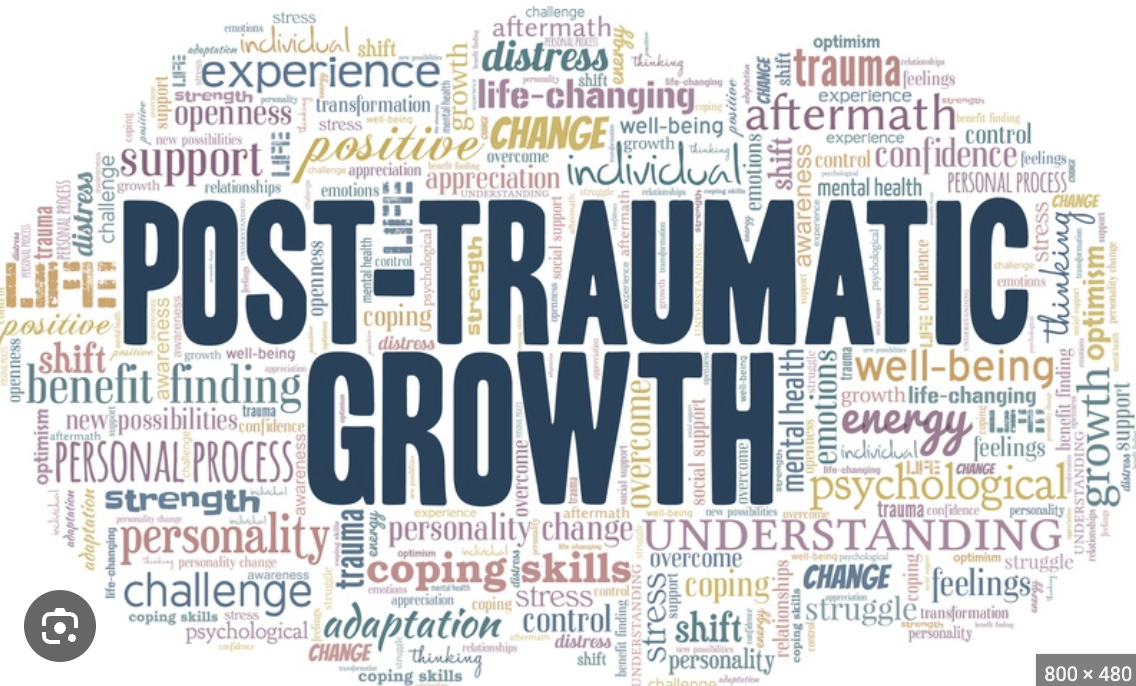
  5. Finally, tragedy catalyzes post-traumatic growth. Positive psychology research shows that some people emerge from trauma with greater resilience, purpose, and moral clarity.

In a perfect world, human beings would love, help, and look out for each other without tragedy as the inspiration. Yet in the absence of a perfect world, we are called to become more perfect versions of ourselves—where even out of devastation, the seeds of compassion, justice, and heroism can take root and flourish.

= = = = = = =

Pay it Forward 25 Years Later: How Heroism Unifies, Heals, and Transforms

By Scott T. Allison

When the movie Pay It Forward premiered in October 2000, the film earned mixed reviews from critics. Some reviewers found it emotionally manipulative or overly sentimental. Others appreciated its intentions but criticized it for leaning too heavily into tearjerker territory.

Audience reactions, however, were warmer. Many viewers were moved by its message, even as critics remained skeptical. The film sparked a meaningful grassroots response — including the creation of the Pay It Forward Foundation and millions of symbolic gestures worldwide — suggesting its core message resonated even if its cinematic execution was widely debated.

Pay It Forward tells the story of Trevor, a thoughtful and idealistic seventh-grader who gets a school assignment to “change the world.” His big idea? Help three people in a big, meaningful way. Instead of asking them to pay him back, they each help three more people. It’s like a kindness chain letter, but in real life.

Trevor’s plan sets off a quiet wave of good deeds, as acts of generosity ripple outward in unexpected ways. Along the way, we see how Trevor’s idea impacts his struggling single mom, his emotionally scarred teacher, and eventually, people he’s never even met.

The Unification Principle of Heroism in Action

Pay it Forward illustrates the Unification Principle of Heroism. All heroic actions stem from a loving commitment to healing, social responsibility, and moral contagion. Trevor’s tragic fate amplifies this theme — his sacrifice is not in vain, as it produces widespread solidarity and emotional transformation across a community.

In this way, Pay It Forward dramatizes the moral and emotional logic of the unification principle: heroism seeks to repair, unite, and uplift the human community.

Here are three key moments in Pay It Forward that capture the Unification Principle of Heroism:

1. Trevor’s Classroom Pitch
When Trevor first shares his “pay it forward” idea in class, it sounds almost too simple: help three people in a big way, and ask them to do the same. But in this moment, he’s planting a seed — not just for random acts of kindness, but for a web of mutual care. He’s not aiming to be the hero himself; he’s inviting everyone to be part of something bigger.

2. The Homeless Man’s Redemption
One of the people Trevor helps is a man struggling with addiction and homelessness. Trevor gives him food, shelter, and more importantly, hope. Later, that man “pays it forward” by helping a woman about to take her own life. It’s a powerful illustration of how heroic compassion can restore connection and meaning, even for those who feel discarded by society.

3. The Final Scene and Candlelight Vigil
After Trevor’s tragic death, something remarkable happens — a huge crowd gathers outside his home with candles. Many of them are strangers who were touched by the ripple effect of his idea. This emotional scene drives home the Unification Principle. Heroism isn’t about one person standing alone, but about how one person’s moral action can inspire unity, healing, and collective transformation.

Trevor’s heroism matters not because he was loud or famous, but because he connected people. His simple idea — help three people in a meaningful way — showed that one person’s courage and kindness can ripple outward, linking strangers, healing wounds, and reminding us that we’re all part of something bigger.

References

Allison, S.T. (2024). Unification principle of heroism. In: Allison, S.T., Beggan, J.K., Goethals, G.R. (eds) Encyclopedia of Heroism Studies. Springer.

Allison, S. T. (2025). The love with a thousand faces: Heroism as embodied love in action. Heroism Science, 10(2), 1-30.

Bray, P. (2024). Hero’s journey and positive transformation. In: Allison, S.T., Beggan, J.K., Goethals, G.R. (eds) Encyclopedia of Heroism Studies. Springer.

Franco, Z. E., Blau, K., & Zimbardo, P. G. (2011). Heroism: A conceptual analysis and differentiation between heroic action and altruism. Review of General Psychology, 15(2), 99–113.

Kidder, R. M. (2005). Moral courage. HarperCollins.

Leder, M. (Director). (2000). Pay it forward [Film]. Warner Bros.

Pascale, R., Sternin, J., & Sternin, M. (2010). The power of positive deviance: How unlikely innovators solve the world’s toughest problems. Harvard Business Press.

Perlin, J.D., McAdams, D.P. (2024). Redemption: Stories heroes live by. In: Allison, S.T., Beggan, J.K., Goethals, G.R. (eds) Encyclopedia of Heroism Studies. Springer.

The Hero’s Journey Parallels the Spiritual Journey

By Scott T. Allison

The stages of the spiritual journey show striking parallels with the stages of the hero’s journey, as both involve a departure from the familiar into a realm of challenges and revelations.

Almost every major spiritual tradition — including Buddhism and Christianity — focuses on human growth resulting from struggle, suffering, and transformation. Franciscan Priest Richard Rohr shares how the story of Jonah became so important to him and his framework of transformation:

Soon after I moved to New Mexico in the late 1980s, I began my studies for what would become the men’s rites of passage. I read everything I could on why every ancient culture deemed it necessary in to initiate the male. It seemed that no culture assumed that men would grow up naturally, because nothing in the male wants to descend. He wants to ascend; he wants to be number one. It’s the competitive nature of masculinity, which has totally informed our culture, no matter who we are. Something has to break through that level of consciousness.  

For me, there is no story—other than the Jesus story itself—which has made that quite as clear as Jonah’s story. Here we have a man who is running from God, running from his own vocation, and God sends a fish to swallow him and take him where he would rather not go. That’s perfect! That’s initiation! We have to be swallowed by something bigger than ourselves. The phrase used by many, including Thomas Merton, was that we have to go into the “belly of the beast”—a place where we are not in control, where we can’t fix it, explain it, understand it, or even like it. Our lack of control, our lack of preference isn’t important. We just have to learn from it.  

I’ve always made a great deal of the passage where Jesus says, “This generation is an evil generation; it seeks a sign, but no sign will be given except the sign of Jonah” (Luke 11:29). He is saying that his message is simple and clear: You’ve got to die before you die. In rites of initiation we teach people that they have to go down before they can possibly go up. In modern psychological language, we call it the death of the ego or the separate self. What has to die is our sense of separateness, because what goes with separateness is superiority. Once we define ourselves according to our nationality, culture, religion, or identity, then we feel we have to defend each one of those. What a waste of energy! We sink to scolding and blaming; not just are we “number one,” but everybody else is a second-class citizen.  

That’s how dualistic our thoughts become. When the private ego didn’t die, Christianity even made salvation into a victory trip, thinking we knew who “won.” To undergo the sign of Jonah feels like losing, and by worldly standards, it looks like it, too. The sign of Jonah is a symbol of surrender, of letting go, of giving up. Most of us wouldn’t describe those as the stages of the journey of enlightenment, but they’re much closer to the real truth and the real journey.  

In short, the spiritual journey is a transformative journey of being humbled by forces beyond our control, and then transforming as a result of that humbling. Triumph over some ordeal leads to a return or rebirth, where the individual, now  enlightened, integrates the acquired wisdom into their life, often with a renewed sense of purpose and a desire to share their insights with others, just as the hero returns with a boon for their community.

References

Allison, S. T. (2024). Spiritual journey’s similarity to the hero’s journey. In S. T. Allison, J. K. Beggan, and G. R. Goethals (Eds.), Encyclopedia of Heroism Studies. Springer.

Rohr, R. (2025).  A story of transformation. Center for Action and Contemplation, July 11th.

What if Love—Not courage or Duty—is the Real Spark Behind Heroism?

By Scott T. Allison

More than 2,000 years ago, Plato’s Symposium explored love’s power to inspire acts of bravery. Phaedrus, the dialogue’s opening speaker, claimed that love could push even the most timid soul to risk everything. He imagined an army of lovers who would fight with unmatched valor, unwilling to appear weak before their beloveds. Love, in this sense, isn’t a soft emotion—it’s a force that fuels greatness.

This idea—that love drives heroism—has ancient roots, but it remains deeply relevant today. Across cultures and throughout history, the most profound acts of courage are often born not from duty or ambition, but from love in its many forms. Romantic love, yes—but also friendship, familial bonds, compassion, and even love of justice or humanity itself.

The Many Faces of Love

The Greeks had at least eight words for love:

  • Eros: passionate, romantic love
  • Philia: deep friendship
  • Storge: familial affection
  • Agape: selfless, unconditional love
  • Ludus: playful, flirtatious affection
  • Pragma: practical, enduring love
  • Philautia: self-love (healthy or narcissistic)
  • Mania: obsessive, intense love

Each of these can motivate heroic acts. A parent shielding a child (storge), a friend standing up for another (philia), a partner risking all for their beloved (eros), or someone acting out of universal compassion (agape)—these are all expressions of love leading to moral courage.

Heroism Isn’t Always Grand

We tend to think of heroes as warriors or saviors, but heroism often shows up in quiet, everyday ways. Love in action is what makes someone speak up for the marginalized, stand firm in the face of injustice, or care relentlessly for someone in need. Philosopher Simone Weil saw love as a kind of moral gravity—a pull toward the suffering of others. Psychologists like Erich Fromm and Viktor Frankl showed that love is an act, a commitment, a leap beyond self-interest.

Heroism as Embodied Love

So what exactly do we mean when we say “heroism is love in action”? It’s more than sentiment. It’s embodied—lived through our physical and relational presence. It’s when we show up. When we take a risk. When we put someone else’s well-being above our own, even in small ways.

Modern research supports this. Studies show that empathy and attachment—forms of love—predict acts of moral courage. Neuroscience reveals that witnessing compassion can create real physiological changes: warmth in the chest, goosebumps, a tear in the eye. These reactions often motivate us to act heroically ourselves.

Love Transforms Us

Joseph Campbell, in The Hero with a Thousand Faces, described the hero’s journey as a transformative adventure. What if love is the real engine behind that transformation? Love, like suffering, has the power to change us—but unlike suffering, we seek it. It’s a risk we take willingly.

When we say that heroism is love in action, we’re naming something ancient and intuitive: that real bravery often springs from deep emotional bonds. That standing up, speaking out, or sacrificing doesn’t come from abstract ideals alone—it comes from loving someone or something deeply enough to act.

Everyday Heroism

Most people, when asked who their greatest hero is, name a parent—often their mother. Why? Because mothers (and fathers) embody love through tireless, unglamorous acts of care, protection, and support. This, too, is heroism.

Love doesn’t need to be dramatic to be powerful. It lives in daily, often invisible acts of kindness and integrity. A caregiver tending to the elderly, a teacher advocating for a struggling student, a bystander stepping in—these are the thousand faces of love, each one heroic.

Why It Matters

Rethinking heroism as love in action expands our moral imagination. It says: you don’t need to be a soldier, activist, or first responder to be heroic. You need only to love with courage.

This perspective democratizes heroism. It welcomes us all into the circle of potential greatness—not because we seek glory, but because we care. And because we’re willing to act.

In the end, love isn’t just an emotion. It’s a call to action. And heroism, at its core, may simply be the choice to answer that call.

References

Allison, S. T. (2024). Definitions and descriptions of heroism. In S. T. Allison, J. K. Beggan, and G. R. Goethals (Eds.), Encyclopedia of Heroism Studies. Springer.

Allison, S. T., Beggan, J. K., & Goethals, G. R. (Eds.) (2024). The encyclopedia of heroism studies. Springer.

Allison, S. T., Goethals, G. R., Marrinan, A. R., Parker, O. M., Spyrou, S. P., Stein, M. (2019). The metamorphosis of the hero: Principles, processes, and purpose. Frontiers in Psychology, 10, 606.

Campbell, J. (1949). The hero with a thousand faces. New World Library.

Frankl, V. (1946). Man’s search for meaning. Beacon Press.

Plato. (2008). Symposium (B. Jowett, Trans.). Project Gutenberg. (Original work published ca. 380 BCE)