 By Scott T. Allison
What makes someone a great leader?
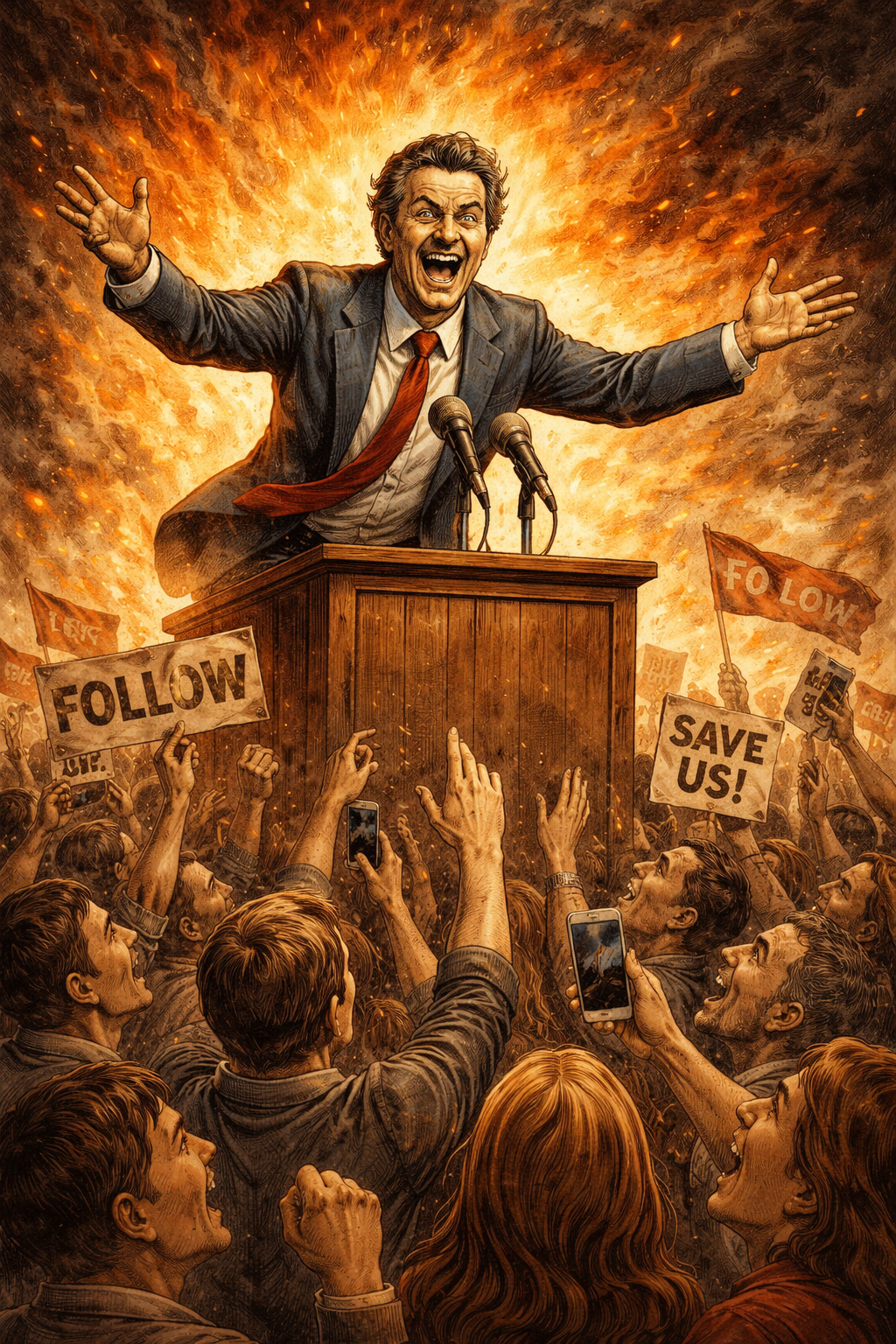
Most of us think we know. We look for confidence. Presence. Strength. Charisma. We’re drawn to people who command attention—those who seem certain, bold, and larger than life.
But what if we’re using the wrong criteria altogether?
A growing problem in modern society is what we might call leadership illiteracy: the tendency to evaluate leaders using the wrong signals. Instead of focusing on what truly matters, we rely on surface-level cues—style over substance, appearance over character. And the consequences can be profound.
The Illusion of Leadership
Leadership illiteracy begins with a simple mistake: confusing how a leader looks with who a leader is. We instinctively equate charisma with competence, confidence with credibility, and strength with moral authority. These assumptions feel natural—but they are often wrong.
Psychologically, this reflects a well-known bias: we rely on quick, visible cues to make judgments about others. In leadership contexts, however, this shortcut becomes especially dangerous. It leads to what we might call the heroism attribution error—the tendency to assume that someone who looks like a hero actually is one.
In reality, many of the traits we admire most in leaders are morally neutral. Charisma, boldness, and determination can serve noble purposes—or destructive ones. Leadership illiteracy occurs when we fail to tell the difference.
The Container vs. the Content
One way to understand this problem is to distinguish between the container of leadership and its content. The container is what we see first: charisma, confidence, resilience, communication skill. These qualities are vivid, engaging, and easy to recognize.
The content is what truly defines leadership: values, moral commitments, and how a leader treats others—especially those with less power. The problem is that the container is loud, while the content is quiet.
We are naturally drawn to leaders who appear strong and inspiring. But these traits tell us very little about whether someone is ethical, compassionate, or trustworthy. In fact, many qualities we associate with heroes—being bold, inspiring, or determined—can just as easily describe villains. These traits are tools. Their moral value depends entirely on how they are used.
Leadership illiteracy is, at its core, a failure to distinguish between container and content.
Why We Keep Getting It Wrong
If the distinction seems obvious, why do we keep making the same mistake? Because human attention is not neutral. We are wired to notice what stands out. Psychologists call this salience—the tendency for vivid, attention-grabbing features to dominate our perception. Charismatic leaders benefit enormously from this bias.
They capture our attention quickly. And once they do, we begin to fill in the blanks. We assume competence. We assume integrity. We assume leadership.
But these assumptions are often unwarranted. This helps explain why people sometimes elevate leaders who are confident but not compassionate, persuasive but not ethical. Charisma creates an illusion of depth where little exists. And once we are impressed, it becomes harder to step back and evaluate critically.
The Real Cost of Leadership Illiteracy
Leadership illiteracy is not just a cognitive error—it has real-world consequences. When individuals and societies prioritize style over substance, they risk empowering leaders whose moral compass is weak or self-serving. History offers many examples of leaders who were compelling and persuasive, yet deeply harmful.
The issue is not that charisma is bad. Charisma can be a force for good. The problem is that charisma is not a reliable indicator of moral character. When we evaluate leaders based on the wrong criteria, we increase the likelihood of poor—and sometimes disastrous—choices.
What We Should Be Looking For
If we are illiterate in leadership, the solution is not to abandon judgment—it is to learn to read leadership differently. Across research on heroism and moral behavior, one theme appears consistently: true leadership is rooted in concern for others. The traits that distinguish genuine leaders are not about dominance or visibility. Instead, they include:
- selflessness
- moral integrity
- compassion
- a commitment to helping and protecting others
These qualities reflect the moral content of leadership. Importantly, they are often less visible than charisma. They do not always capture attention. But they are far more predictive of whether a leader’s actions will benefit or harm others.
Mythologist Joseph Campbell described the hero’s journey as a transformation from self-centeredness to service. At its end, the hero recognizes their deep connection to others. This idea echoes across traditions. Martin Luther King Jr. emphasized our “interrelated structure of reality,” while Albert Einstein urged us to expand our circle of compassion beyond ourselves.
These perspectives converge on a simple insight: The best leaders unite. They do not divide.
Leadership as Love in Action
At its core, effective leadership can be understood in one phrase: Love in action. This is not about sentimentality. It is about behavior—how leaders act in relation to others. When people take risks to protect others, stand up against injustice, or act with integrity in difficult situations, they are expressing leadership grounded in care.
This kind of leadership appears in everyday life:
- a teacher supporting a struggling student
- a colleague speaking up against unfairness
- a community member helping others in crisis
- an individual choosing integrity over convenience
These actions may not be flashy. But they reveal something more important than charisma: character.
Becoming More Literate About Leadership
If leadership illiteracy is the problem, then the solution is learning to ask better questions. Instead of asking: “Is this person impressive?” We should ask: “Who does this person serve?”
Do their actions benefit others, or primarily themselves? Do they expand compassion, or create division? Do they take responsibility, or deflect blame?
These questions shift our focus from appearance to substance. They help us evaluate the content of leadership, not just its container.
Final Thought
We all want strong leaders—people who inspire us and guide us through uncertainty. But if we rely on the wrong signals, we will continue to choose poorly.
Leadership illiteracy is not inevitable. It is a skill gap—one we can correct. Because in the end, leadership is not about who stands out. It is about who shows up for others—consistently, compassionately, and with integrity.
And that is something no amount of charisma can replace.
References
Allison, S. T. (2024). Heroism attribution error. In S. T. Allison, J. K. Beggan, and G. R. Goethals (Eds.), Encyclopedia of Heroism Studies. Springer.
Allison, S. T. (2025). The love with a thousand faces: Heroism as embodied love in action. Heroism Science, 9, 1-30.
Allison, S. T., & Goethals, G. R. (2024). Heroic leadership: An influence taxonomy of 100 exceptional individuals (2nd ed.). Routledge.
Goethals, G. R., Allison, S. T., & Sorenson, G. J. (Eds.) (2023). The SAGE encyclopedia of leadership studies. Sage.