
 1. Understanding the Meanings and Uses of Criticism and Space€”What is the "South"?Looking at historical text, empirical data, popular culture (music, movies, television), political rhetoric (particularly surrounding the '08 political campaign and, Obama, and reparations), we will continue to come back to the question "what is the South? in the United States" and how does a cultural conception of space uproot itself from physical geography to become part of the national imagination? In her recent book For Space, cultural geographer Doreen Massey urges us to think critically about maps. Her concern is that a conception of space-as-surface is problematic because it permits us to think of "places, peoples, cultures simply as phenomena €˜on' this surface." The political stakes are high and the question for Massey foundational: a people that are no longer fully conceived of as human beings are more susceptible to territorial domination. Equating a people with the map of their territory, Massey points out, can threaten a people's history and culture. Moreover, abandoning a view of space as maps, she argues, might allow us to see "a simultaneity of stories-so-far," and places would become "collections of those stories, articulations within the wider power-geometries of space."
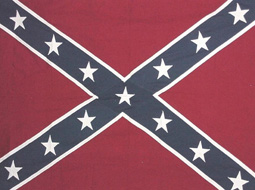 2. Understanding the Historical, Social, Political, and Symbolic Meaning of the ConfederacyLast fall at Brown University, they sponsored a conference entitled “Repairing the Past: Confronting the Legacies of Slavery, Genocide, & Caste." Building on this concept, we wish to situate the confederacy as a cultural phenomenon in order to confront history, theory, identity, and place. Our interdisciplinary approach still affords the war a prominent role in helping us understand the Confederacy, but, among other advantages, it preempts the possibility that the confederacy can be understood as a relic of history or that it can be conflated with military conflict. We wish to examine how the places, rhetoric, food, music, art and popular media of the Confederacy inform our thinking about race, and how the Confederacy is implicated in today's racial discourse. Though a history of the Confederate States of America (CSA) would be interesting and important as a stand-alone topic, "Critical Confederacy Studies" enhances and challenges current approaches based on narratives or history by emphasizing the materiality of everyday life.
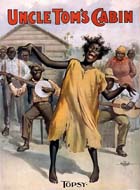 3. Understanding Reparations and Resistance to Reparations for the Descendants of SlavesOne of the most interesting political, legal, and intellectual debates centers on the idea of reparations for descendants of slaves. Reparations have been granted to other groups€”the victims of the Jewish Holocaust and the Japanese-Americans placed in Internment Camps to name two. Yet, when the idea of reparations is raised for African-Americans as a way to correct past wrongs, there are many who resist, some on legal issues, and others on the grounds that there is no way to compensate those who actually experienced slavery. We hope to begin a discussion of reparations with recognition of the way slavery, as an institution, is depicted in contemporary Southern life€”especially the tourist industry. When Williamsburg, Virginia, re-enacted a slave auction, there were extreme reactions on the part of White and Black "bystanders."
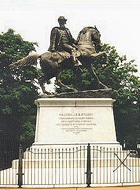 4. Understanding Where We Live, Learn and Play: Richmond, Capital of the ConfederacyIn one way or another, there has always been a struggle over the territory of Richmond, Virginia. The Confederacy is crucial to that struggle. This is evident from the prominence of confederate statuary and public memorials in the street plan, to the annexation of portions of the city in 1970 by Chesterfield County that diluted the collective power of a growing black population, to the remnants of desegregation plans in the public school districts. It is evident also in its absences or disconnections: as banks find themselves making reparations for slavery nationally, Richmond's black history museum makes no mention of slavery or the Confederacy in its exhibits. To many, "public" spaces in Richmond re/present a hostile, racist Old South, and the stubborn permanence of the monuments and other symbols serve as daily reminders that Richmond is still the preeminent place of/for the Confederacy. Perhaps the most tangible and prominent of confederate symbols is the flag, which recently again prompted an impassioned debate, this time in the context of a Virginia Senator's re-election campaign. A Lexis-Nexis search for articles about the Confederacy in the Richmond Times-Dispatch reveals that in the past five years there have been 928 stories, an average of three to four per week.
Critical Confederacy Studies: History, theory, race
18
Jan